
- Disperse, deagglomerate and wet-mill pigment particles down to the nanometer range.
- Improve color strength, hiding power, scratch, crack and UV resistance, surface finish, and durability of inks, paints, varnishes, and coatings.
- Simultaneously reduce particle sizes and remove entrapped air and/or dissolved gasses from the pigment suspension medium.
Overview
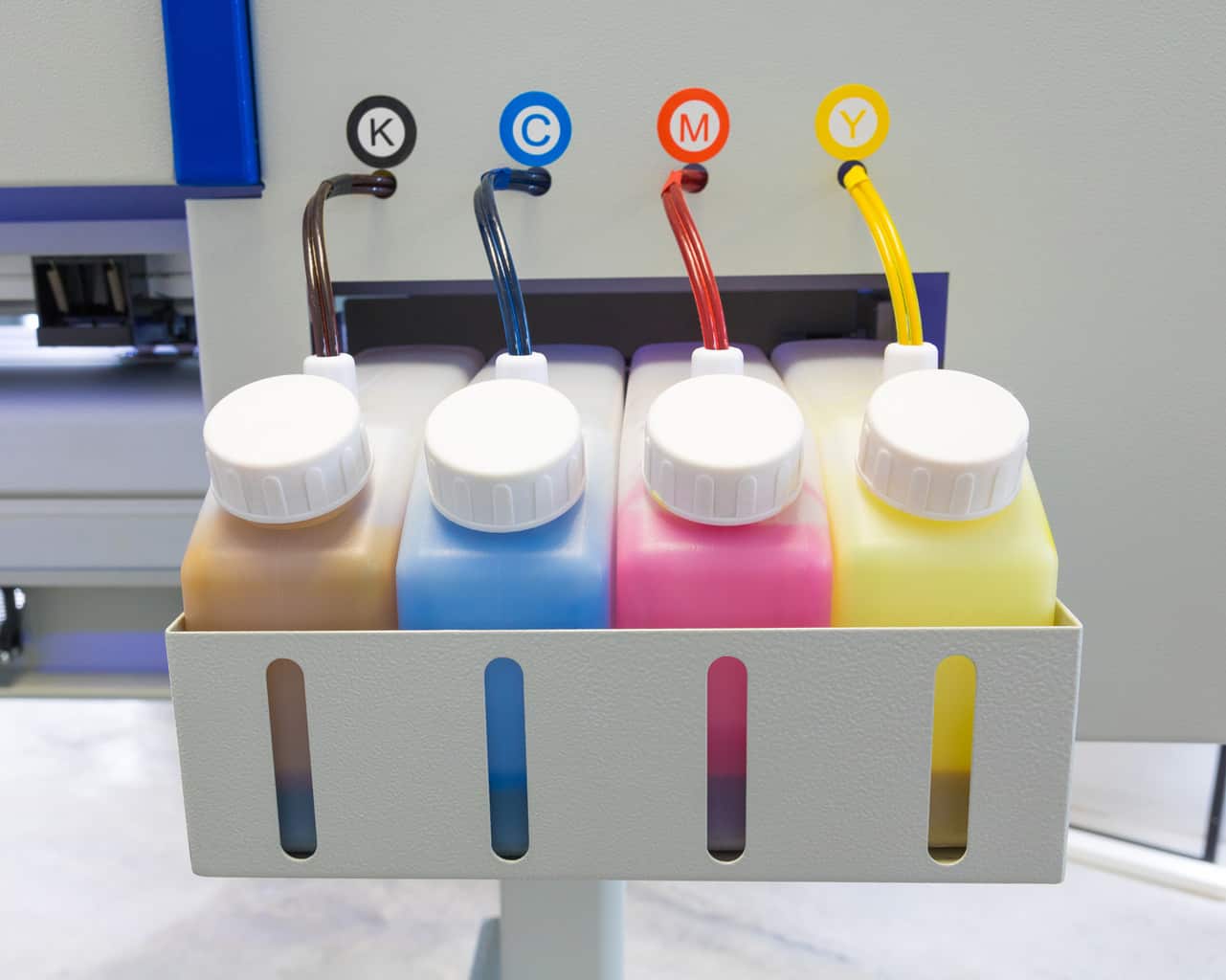
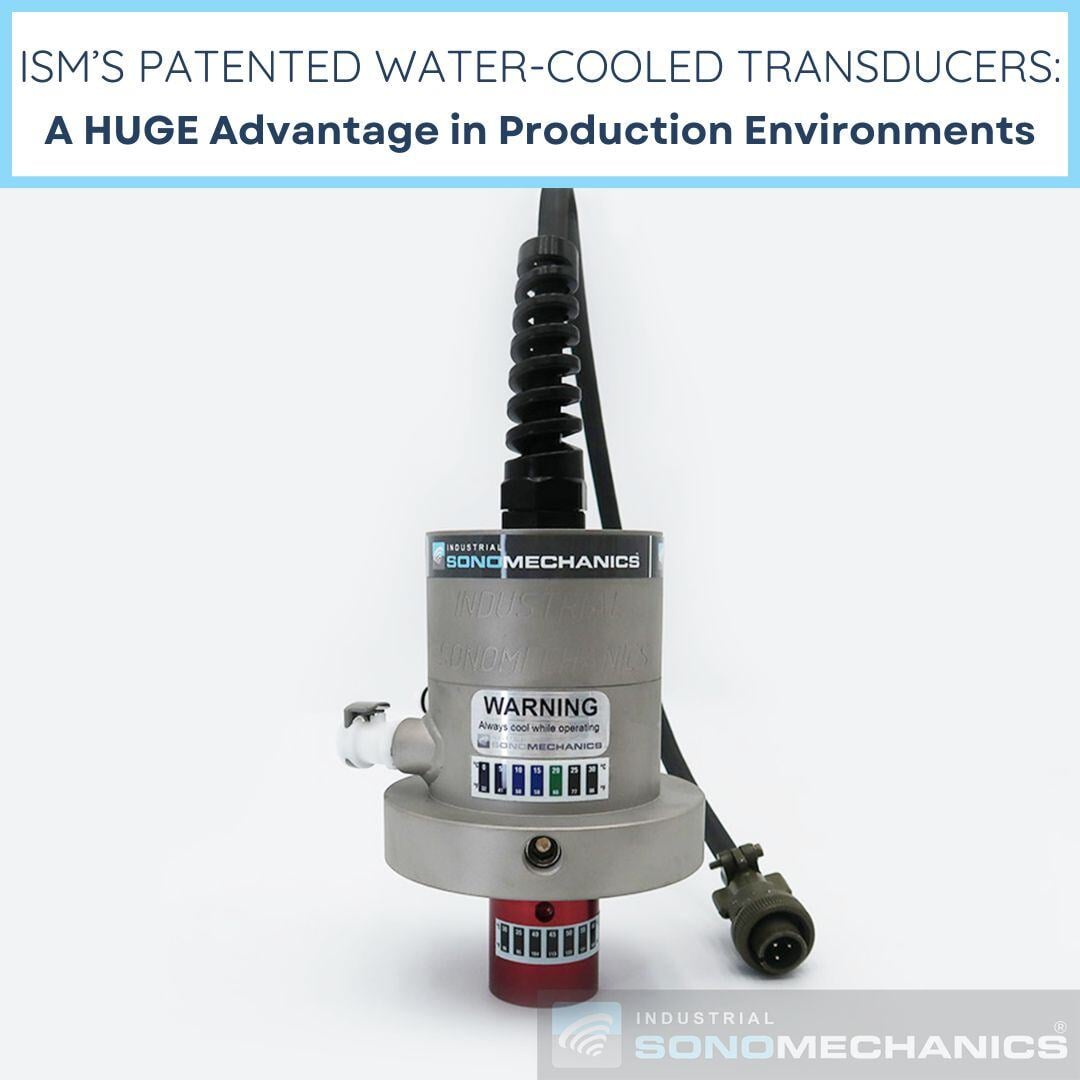
Industrial Sonomechanics® ultrasonic processors provide a convenient means for dispersing, deagglomerating and wet-milling pigment particles down to the required nanometer size range, while simultaneously removing any entrapped air and/or dissolved gasses (degassing) from the suspension medium. With our patented Barbell Horn® Ultrasonic Technology (BHUT), these processes can be easily implemented at any scale, guaranteeing reproducible and predictable high-quality results.
Blog Posts

Customer Testimonials
Petri Jokiranta, Managing Director, Adpap Ltd.
Videos
- Ultrasonic Tools for Advanced Composite Manufacturing



- Ultrasonic Dispersion of Carbon Black in Water, 10 Liter Batch
- Ultrasonic Dispersion of Carbon Black in Water, 750 ml Batch
Ebooks
- MAKING STABLE EMULSIONS: A Guide to Formulation and Processing Conditions Optimization
FAQs
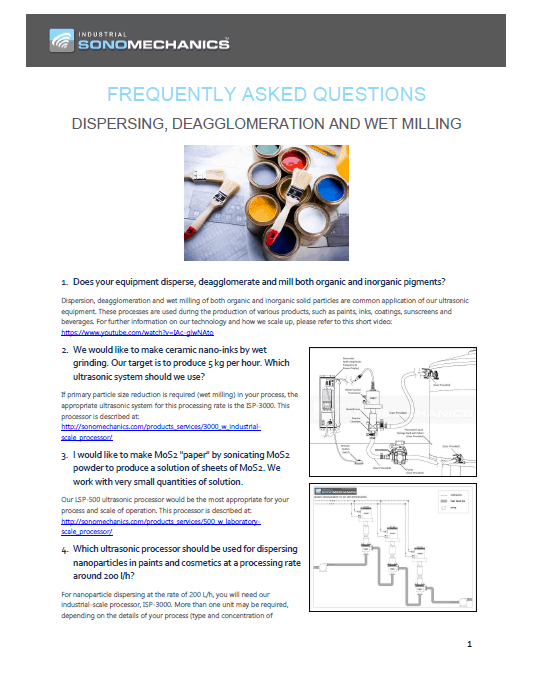
- ULTRASONIC DISPERSING & WET MILLING: Frequently Asked Questions
Frequently Asked Questions
What is ultrasonic pigment dispersion?
Ultrasonic pigment dispersion uses high-intensity cavitation to break apart and evenly distribute pigment particles in a liquid medium, reducing them toward the nanometer range for inks, paints, varnishes, and coatings.
How does particle size affect pigment performance?
Critical properties such as color strength, hiding power, surface finish, and durability depend on pigment particle size. Because color strength relates to exposed surface area, reducing and homogeneously dispersing particles substantially enhances it.
What is ultrasonic wet milling?
Ultrasonic wet milling reduces and deagglomerates particles directly in a liquid suspension. It can simultaneously reduce particle size and remove entrapped air or dissolved gases from the suspension medium.
Does smaller pigment size improve durability?
Yes. Reducing pigment particle size leads to closer particle packing and better incorporation into the binding medium, which can improve scratch, crack, and UV resistance of inks, coatings, varnishes, and paints.
Can pigment dispersion be scaled to production volumes?
Yes. ISM’s Barbell Horn Ultrasonic Technology (BHUT) processors disperse and wet-mill pigments at any scale, delivering reproducible, predictable, high-quality results.