• Skip to primary navigation
  • Skip to main content
  • Skip to footer
  • Home New
  • Products & Services
    • LSP-600 Laboratory-Scale Processor
    • BSP-1200 Bench-Scale Processor
    • ISP-3600 Industrial-Scale Processor
    • Ultrasonic Extraction Systems
    • All-In-One NanoStabilizer®-LSO
    • All-In-One NanoStabilizer®-LSSP
    • All-In-One NanoStabilizer®-LT
    • Spare Parts & Accessories
    • Equipment Rental and Leasing
    • Tech Support/Consulting/Training
  • Technology
    • Barbell Horn® Ultrasonic Technology
    • High Amplitudes After Scale-Up
    • Water-Cooled Transducer Advantages
  • Industries
    • Medical Cannabis
    • Pharmaceutical
    • Cosmetic & Dermatological
    • Food & Beverage
    • Nutraceutical
    • Pesticide & Insecticide
    • Candle Wax, Oil & Adhesive
    • Paint, Ink & Coating
  • Processes
    • Production of Nanoemulsions
    • Degassing & Deaeration
    • Extraction & Cell Disruption
    • Dispersing & Deagglomeration
    • Nano-Crystallization
    • Alternative/Biological Fuels
    • Petroleum Fuel Upgrading
  • About Us
    • Introduction to ISM
    • Our Customers
    • Our History
    • Careers
    • Events
  • Resources
    • Knowledge Hub
    • Videos
    • Books & Ebooks
    • Intellectual Property
    • Peer-Reviewed Publications
    • Frequently Asked Questions
  • FAQs
  • Web Store
  • Blog
  • Contact Us
  • Made In USA
Home » Dispersing & Deagglomeration

Dispersing & Deagglomeration

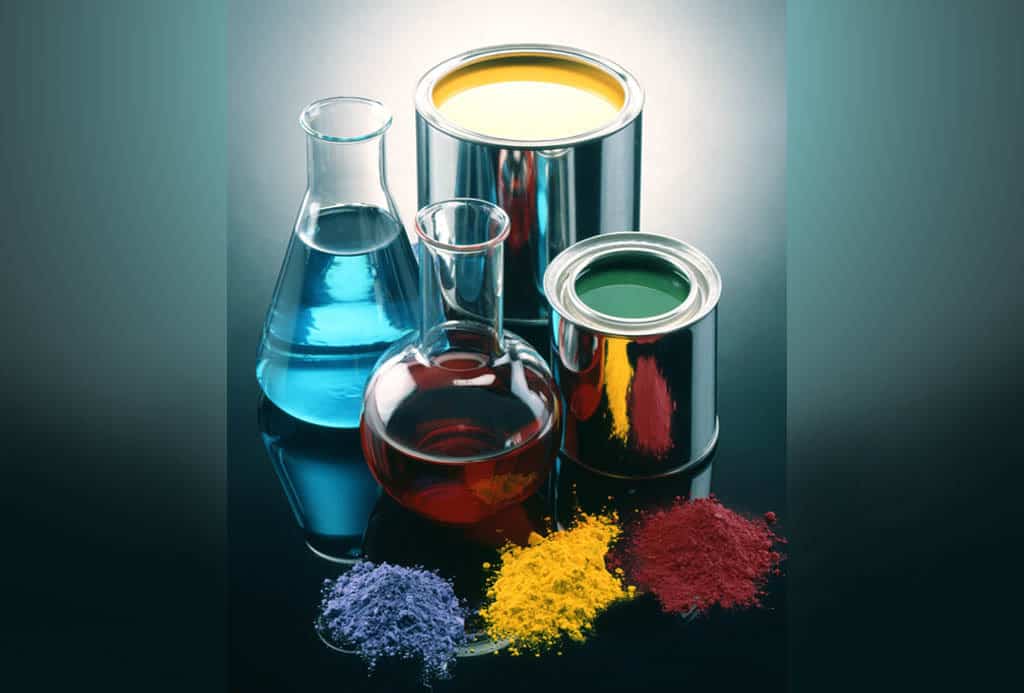
ultrasonic dispersing of pigments such as paints
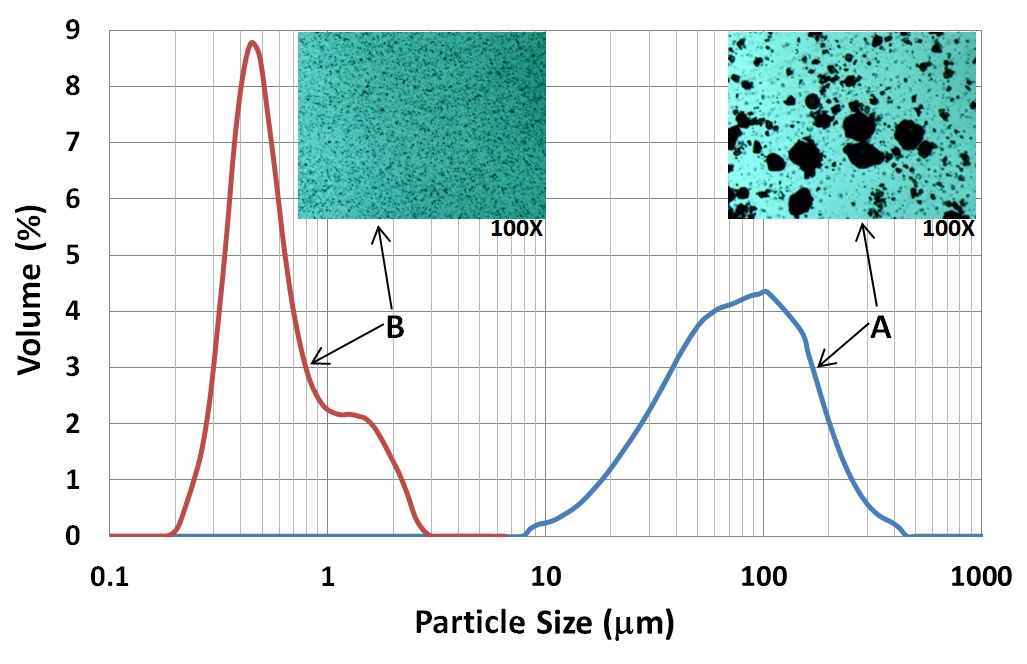
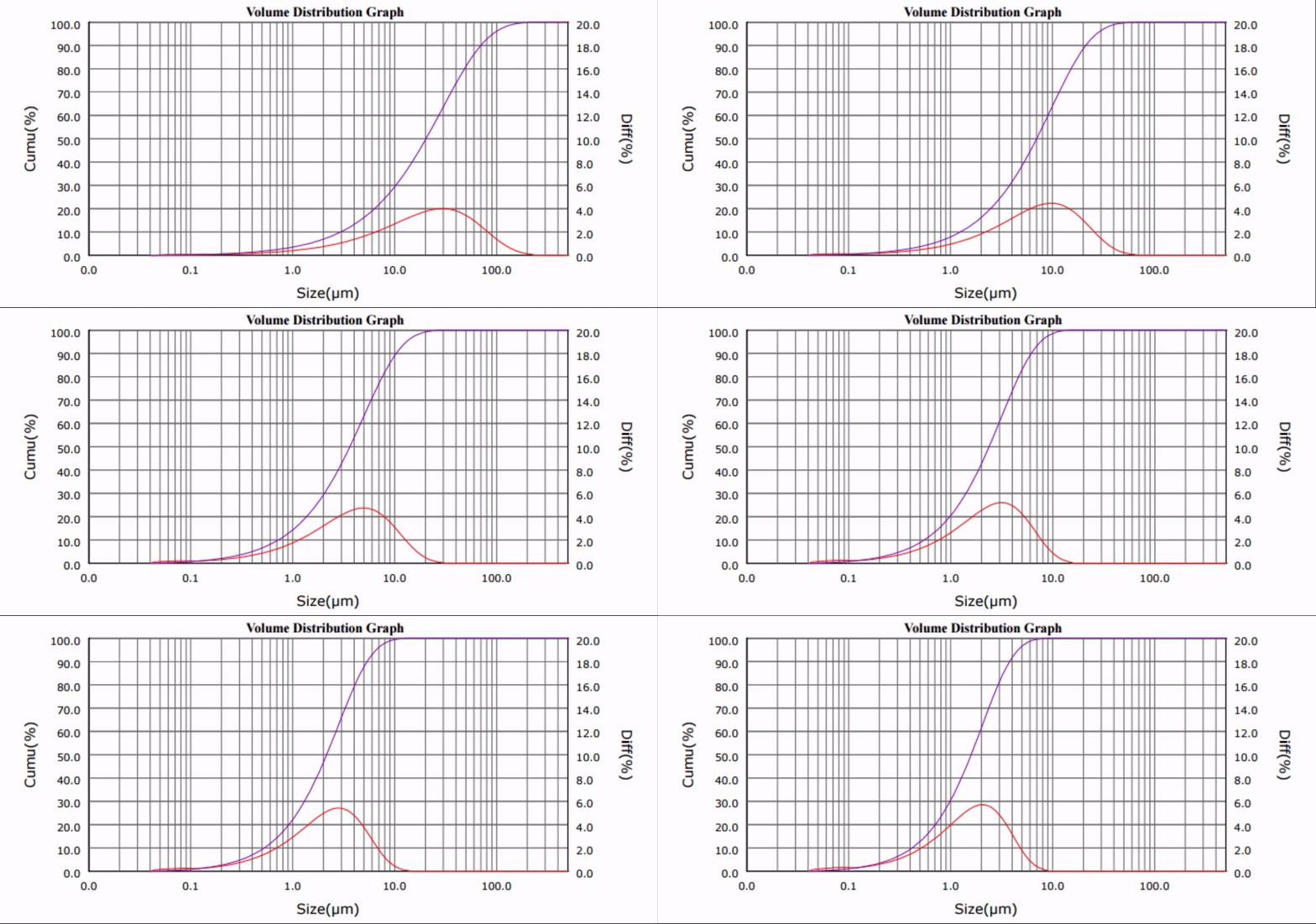
The dispersing of powders into liquids is an important step in the formulation of various products, such as paint, ink, coatings, and other polishing media. ISM’s processors are able to achieve a homogeneous dispersing, deagglomeration and milling at lab, bench and industrial scale.

Overview

Paint is not only used for decorative purposes but it is also used as a coating material used in automotive, construction, mechanical engineering and many other industries. You can improve your paint, color and coatings by using the sonication method for dispersing. Toner powder used for laser printers and photocopiers are used in order to achieve the best printing results in bright fine colors, while achieving low consumption and best adhesion to all types of print paper. Developing the best possible formulation and smallest particle size are important steps to achieving the best ink product. Ultrasound is an efficient dispersing method and unlike other technologies, it is less costly and easier to operate and maintain. ISM’s patented Barbell Horn® Ultrasonic Technology makes the dispersing process easy to scaled up from laboratory to the industrial scale while maintaining the same final product quality.
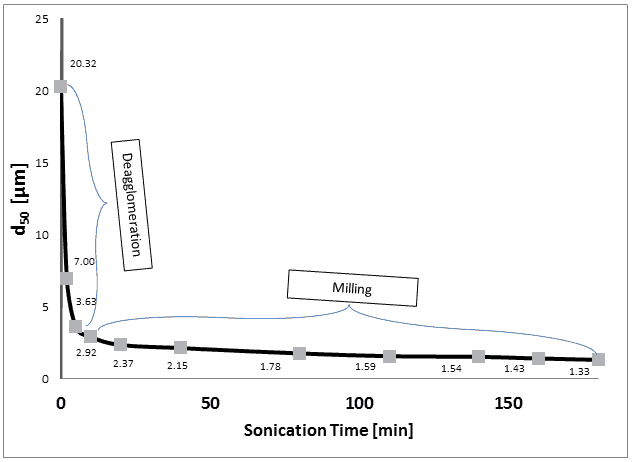
inks and dispersing of pigments

Blog Posts

Recap: 4th International Process Intensification Conference (IPIC4)
09/10/26

Recap: 4th International Process Intensification Conference (IPIC4)

Recap: 4th International Process Intensification Conference (IPIC4)

Industrial Sonomechanics (ISM) was honored to participate in the 4...

Read more...
Recap: Adhesives & Bonding Expo
08/03/26

Recap: Adhesives & Bonding Expo

Recap: Adhesives & Bonding Expo

Industrial Sonomechanics (ISM) had a great time exhibiting at the ...

Read more...
Ultrasonic Extractor Pro-Lite
06/30/26

Pro-Lite™: Semi-Automated Ultrasonic Extractor for Pilot-Scale Production

Ultrasonic Extractor Pro-Lite

We are excited to spotlight theUltrasonic Extractor Pro-Lite™— a sem...

Read more...
Read All Blog Posts

Customer Testimonials

Petri Jokiranta, Managing Director, Adpap Ltd.

“Adpap Ltd. is a pulp and paper, paint, chemical, raw material and additive process expert with clients around the world. We have been using ISM`s ISP-3000 industrial system since 2014. We have successfully implemented their equipment in several of our processes and are very satisfied with the results. ISM has been excellent in responding to questions and addressing any of our concerns. We look forward to working with them on many upcoming projects in the near future.”
See More Customer Testimonials

Videos

  • Ultrasonic Tools for Advanced Composite Manufacturing
  • Ultrasonic Dispersion of Carbon Black in Water, 10 Liter Batch
  • Ultrasonic Dispersion of Carbon Black in Water, 750 ml Batch
Watch All videos

FAQs

  • Ultrasonic Dispersing & Deagglomeration FAQ’S
    Download PDF

FAQs

  • Ultrasonic Systems & General Processing FAQ’S
    Read FAQs

Have Questions?

Consult with an application specialist
or request a quotation.

Contact Us

Frequently Asked Questions

What is the LSP-600 ultrasonic processor used for?

The LSP-600 is ISM’s laboratory-scale ultrasonic processor designed for feasibility testing, R&D, and process optimization. It is used for nanoemulsion formulation, extraction and cell disruption, degassing, dispersing and deagglomeration, and nano-crystallization at lab scale. It handles liquid volumes from 15 mL to 2 L and operates in both batch and flow-through configurations.

What makes the LSP-600 different from a standard lab sonicator?

Unlike conventional lab sonicators, the LSP-600 uses ISM’s patented Barbell Horn® Ultrasonic Technology (BHUT), which generates significantly higher ultrasonic amplitudes (up to 100 microns) than standard probes. It is also engineered for direct scale-up — any process developed on the LSP-600 can be transferred to the BSP-1200 or ISP-3600 without re-optimization.

What is the processing capacity of the LSP-600?

The LSP-600 handles 15 mL to 100 mL in batch mode with the Conventional Horn (CH), 100 mL to 500 mL in batch mode with the Full-Wave Barbell Horn (FBH), and 500 mL to 2 L in flow-through mode. Productivity rates range from approximately 200 mL/h for demanding tasks like pharmaceutical nanocrystallization, up to 10+ L/h for fast processes like degassing.

Is the LSP-600 globally compliant?

The LSP-600 is built with global compliance in mind. All wetted parts — 316 stainless steel reactor chamber, Ti6Al4V titanium horns, and Buna-N or Teflon gaskets — are food compatible. It carries CE and TÜV certification and is used globally in pharmaceutical research studies and various R&D trials.

Can the LSP-600 scale up to production?

Yes. The LSP-600 is specifically designed as the first step in ISM’s scale-up pathway: LSP-600 (lab) → BSP-1200 (bench) → ISP-3600 (industrial). Because all three processors use the same BHUT technology, process parameters developed on the LSP-600 transfer directly — with no loss in amplitude, processing conditions, or result reproducibility.

Footer

footer logo

Photograph of Industrial Sonomechanics Headquarters

Quick Links

  • FAQs
  • Blog
  • Contact Us
  • Shop Spare Parts
  • Shop NanoStabilizer®
  • Events

Connect With Us

+1-‪786-233-9255‬
7440 SW 50th Terrace #109
Miami, FL 33155‬
co*****@***********cs.com‬
  • Facebook
  • Instagram
  • LinkedIn
  • Twitter
  • YouTube
© Industrial Sonomechanics 2026

[pum_remote_content method=”load” load_css_selector=”.entry-title” loading_icon=”lukehass/load1″ min_height=”200″][/pum_remote_content]

ggga


Webcast Recording: Ultrasonic Liquid Processing for Cannabis Oil Nano-Emulsification & Extraction

Translucent Nanoemulsion Produced with an Industrial-Scale Ultrasonic Processor, ISP-3000

Ultrasonics 2016 Conference Presentation by Dr. Alexey Peshkovsky, Industrial Sonomechanics, LLC.

Can CBD or THC be Made Water-Soluble?

Barbell Horn Ultrasonic Technology by Industrial Sonomechanics

Can CBD or THC be Made Water-Soluble?

Ultrasonic Degassing of Water with Detergent

Translucent Nanoemulsion Produced with an Industrial-Scale Ultrasonic Processor, ISP-3000

Ultrasonic Degassing of Heavy Industrial Gear Oil

Ultrasonic Dispersion of Carbon Black in Water, 750 ml Batch

Ultrasonic Dispersion of Carbon Black in Water, 10 Liter Batch

Ultrasonic Cavitation Produced by HBHO at Amplitudes of 30 and 100 microns

Ultrasonic Removal of Air Bubbles from Epoxy Resin, Batch Mode

Water in Oil Nanoemulsion Prepared by High-Intensity Ultrasound

Barbell Horn Ultrasonic Technology by Industrial Sonomechanics

BSP-1200 Bench-Scale Ultrasonic Processor – Barbell Horn Replacement Procedure

Algae Oil Extraction Using High-Intensity Ultrasound